
Creating professional AI videos used to require expensive software and technical expertise. That changed when Grok AI video entered the scene. Now, anyone can generate cinematic 6-second clips in under 30 seconds—without spending a penny.
But here’s the challenge most creators face: the 6-second duration cap, inconsistent character rendering, and confusing tier restrictions leave many users frustrated before they unlock the true potential of Grok AI video generation.
This guide walks you through everything from basic setup to advanced workflows. You’ll learn how to extend clips into full-length sequences, maintain visual consistency, and automate your production pipeline using free tools.
What Is Grok Imagine Video?
Grok Imagine represents xAI’s entry into the generative video space. Integrated directly with the X platform, it allows users to transform text descriptions or static images into moving content. Unlike competitors requiring premium access for basic features, Grok AI video provides meaningful functionality at no cost.
The platform has gained traction among creators seeking realistic motion quality without subscription barriers. Its accessibility makes Grok AI video particularly appealing for social media content, short-form storytelling, and experimental projects.
Key Features and Capabilities
Grok supports multiple generation modes:
- Text-to-video: Describe your scene and watch it come alive
- Image-to-video: Upload a still photo and add motion
- Video transformation: Modify existing clips with new effects
Technical specifications include support for various aspect ratios (1:1, 16:9, 9:16, 4:3), resolutions up to 720p, and durations between 1-15 seconds via API. Free users typically receive 6-second outputs. Notably, generated content carries no watermarks.
How Grok Compares to Sora, Veo 3, and Kling
Each major platform serves different needs:
| Platform | Strength | Limitation |
| Grok AI Video | Free access, natural motion | 6-second default, strict moderation |
| Sora | Superior cinematic quality | Limited availability, premium required |
| Veo 3 | Native audio generation | Google ecosystem dependency |
| Kling | Competitive pricing | Less recognition in Western markets |
The advantage of Grok AI video lies in its accessibility. While Sora produces Hollywood-quality output, most creators cannot access it. Grok democratizes video generation for everyday users.
Alternative Tools for Image-to-Video Generation
For projects requiring higher resolution or batch capabilities, platforms like AI Image to Video offer complementary features. Such tools integrate multiple AI models (including Kling, Veo, and Wan) with 4K output support—useful when Grok AI video’s 720p ceiling proves limiting.
Grok Video Pricing and Rate Limits Explained
Understanding Grok’s tier structure helps you maximize value from your chosen plan.
Free Tier Limits and What You Actually Get
Free accounts receive approximately 3-10 image generations daily, with video allowances varying based on server load. Reset times prove inconsistent—users report limits refreshing anywhere from 12-24 hours. Peak hours often trigger additional throttling.
Important caveat: failed generations sometimes count against your quota. If a clip doesn’t render properly, you may still lose that attempt.
Premium, Premium+, and SuperGrok Plans
Paid tiers unlock higher volumes:
- Premium ($8/month): ~50 daily generations
- Premium+ ($40/month): ~100 daily generations
- SuperGrok ($30/month): Unlimited chat, enhanced video limits
- SuperGrok Heavy ($300/month): ~500 videos daily for power users
For most creators, Premium provides sufficient headroom. SuperGrok Heavy targets production studios requiring constant output.
API Pricing for Developers ($0.05/second)
Developers accessing Grok programmatically pay $0.05 per second of generated video and $0.02 per image. For a typical 6-second clip, that translates to $0.30.
This model suits applications needing on-demand generation without subscription commitments. Calculate your expected monthly usage to determine whether API or subscription pricing works better.
How to Create Videos with Grok (Step-by-Step)
Getting started with Grok AI video takes only minutes.
Setting Up Your Grok Account
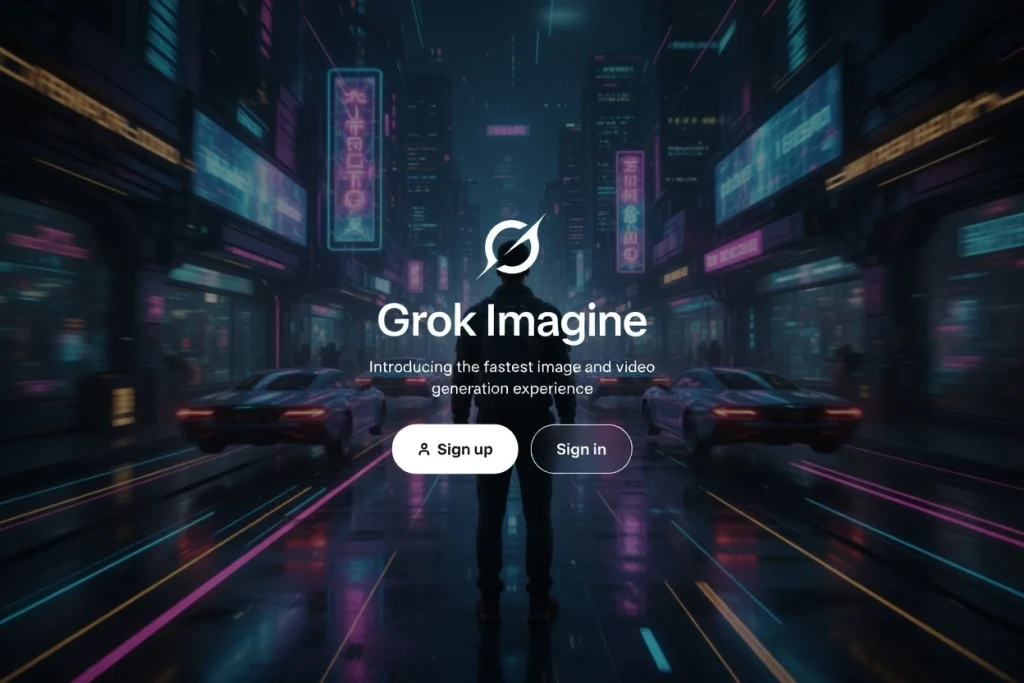
Visit grok.com and create an account. Free registration unlocks basic Grok AI video capabilities immediately. Navigate to the “Imagine” feature within the interface to access video tools.
Text-to-Video Generation
Enter a descriptive prompt specifying your desired scene. Include details about:
- Subject and action
- Environment and lighting
- Camera angle and movement
- Visual style (cinematic, animated, realistic)
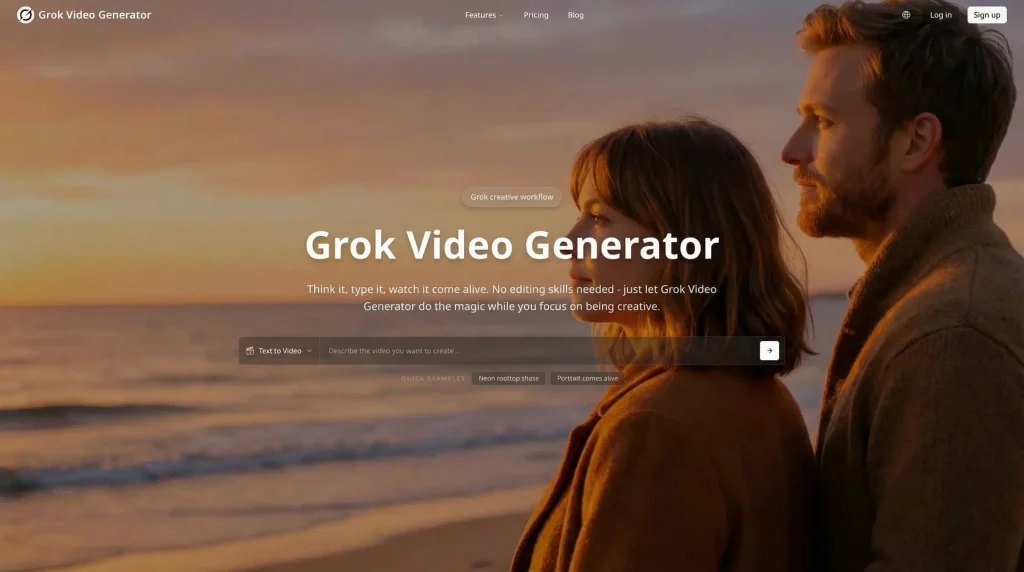
Select your preferred aspect ratio based on intended platform (9:16 for TikTok/Reels, 16:9 for YouTube). Click generate and wait approximately 30 seconds.
Image-to-Video Conversion
Upload a source image meeting quality requirements (clear subjects, adequate resolution). Write a motion prompt describing how elements should move. Grok AI video interprets both the visual input and text instructions to create coherent animation.
Video Editing and Transformation Features
Beyond generation, Grok offers transformation capabilities. Upload existing clips to apply new styles, adjust pacing, or modify visual elements. These tools expand creative possibilities beyond pure generation.
Creating Longer Videos with the End-Frame Technique
The 6-second cap frustrates many users. Community-developed workarounds solve this limitation.
Understanding the 6-Second Limitation
Grok defaults to brief clips because longer generations require exponentially more computational resources. This keeps free access sustainable while encouraging upgrades for extended content.
Step-by-Step End-Frame Workflow
The “end-frame technique” chains multiple clips into seamless sequences:
- Generate your initial 6-second clip
- Pause playback on the final frame
- Right-click and copy that frame as an image
- Paste into Imagine as a new source image
- Write a continuation prompt describing what happens next
- Generate the next segment
- Repeat until achieving desired length
This method produces 60-second sequences using 10 iterations.
Maintaining Character Consistency Across Clips
Faces disappearing mid-clip represents the biggest frustration with extended videos. Combat this by:
- Creating unified reference images showing characters from multiple angles
- Including explicit character descriptions in every continuation prompt
- Specifying animation style consistently across all generations
- Keeping subjects’ faces visible in frame where possible
Editing and Stitching Clips Together
Use free editors like CapCut for final assembly. Adjust playback speed to resolve pacing mismatches (common in extended sequences). Google Photos offers quick 2X/4X speed adjustments for basic corrections.
Advanced Prompting Techniques for Better Results
Prompt quality directly determines output quality.
Scene Description Best Practices
Be specific rather than vague. Compare these approaches:
Weak: “A person walking”
Strong: “Young woman in red dress walking through rain-slicked Tokyo street at night, neon reflections on wet pavement, shallow depth of field”
Environmental details, lighting conditions, and mood indicators dramatically improve results.
Camera Movement and Cinematic Style
Specify camera behavior explicitly:
- Tracking shot following subject
- Slow push-in toward focal point
- Dutch angle for tension
- Steadicam movement through scene
Consistency matters when creating multi-clip sequences. Match camera style across all prompts.
Using Timestamps for Precise Scene Control
Divide your 6-second window into segments:
“0-2s: Camera slowly pans left across landscape. 2-4s: Bird enters frame from right. 4-6s: Bird lands on branch, camera follows.”
This technique—underused by most creators—provides granular control over timing.
Common Prompting Mistakes to Avoid
- Auto-generation reliance: Disable automatic settings for better control
- Contradictory instructions: Conflicting directions produce chaotic results
- Excessive complexity: Simpler prompts often outperform elaborate ones
- Ignoring aspect ratio: Vertical prompts generate poorly in horizontal formats
Automation Tools and Batch Processing Workflows
Power users scale production through automation.
Chrome Extensions for Grok Automation
Browser extensions enable batch generation:
- Grok Automation Extension: Queue multiple prompts for sequential processing
- Auto Whisk: Automated image generation for consistent character references
These tools transform manual workflows into semi-automated pipelines.
Complete Workflow: Script to Final Video
Professional creators chain multiple tools:
- Arena.ai: Generate scripts and prompt sequences
- Grok + extensions: Batch-produce video clips
- Google AI Studio: Add voiceover narration
- CapCut: Final editing, effects, and export
This pipeline produces polished content using entirely free resources.
High-Volume Alternatives for Batch Processing
When project demands exceed Grok AI video capabilities, platforms supporting batch processing with multiple AI model options become valuable. AI Image to Video serves this niche with high-volume processing and 4K watermark-free output.
Troubleshooting Common Grok Video Issues
Every platform has quirks. Here’s how to handle Grok’s.
Rate Limit Workarounds and Optimization
Legitimate strategies for managing limits:
- Generate during off-peak hours (early morning works best)
- Avoid wasting attempts on poorly-structured prompts
- Understand that failed generations may still count
- Consider Premium if consistently hitting free caps
Fixing Character Consistency and Face Disappearance
When characters degrade across extended sequences:
- Use stronger source images with clear facial features
- Add explicit face descriptions to continuation prompts
- Choose clip lengths that keep faces visible throughout
- Accept some variation as inherent to current AI limitations
Resolving Speed and Pacing Mismatches
Extended clips often exhibit inconsistent motion speed. Post-production speed adjustment in video editors corrects this effectively. Match pacing during final assembly rather than expecting perfect consistency from generation.
Dealing with Content Moderation Restrictions
Grok’s moderation sometimes blocks unexpectedly modest content. Users report even cropped tops or swimwear triggering restrictions. Regional regulations (particularly UK policies) influence these filters. Set realistic expectations for creative boundaries.
FAQs About Grok AI Video
Is Grok AI video generation really free?
Yes. Free accounts access Grok AI video generation through grok.com with daily limits typically ranging 3-10 generations depending on server conditions.
How long can Grok AI video clips be?
Free generation produces 6-second clips by default. API users can request 1-15 seconds. For longer content, the end-frame technique chains multiple clips together.
Which is better: Grok AI Video, Sora, or Veo 3?
Each excels differently. Grok AI video offers the best free tier with realistic motion. Sora produces superior cinematic quality but limits access. Veo 3 uniquely generates synchronized audio. Choose based on budget and requirements.
Can I use Grok videos commercially?
Generated content includes no watermarks. Commercial usage rights depend on current xAI terms of service, which may vary by subscription tier. Review current policies before commercial deployment.
Why do characters’ faces disappear in my videos?
This common limitation stems from AI difficulty maintaining consistent features across motion. Mitigate by using detailed reference images, keeping faces in frame, and explicitly describing character features in every prompt.
Conclusion
Grok AI video has genuinely transformed accessible video generation. With proper technique—particularly the end-frame workflow and thoughtful prompting—creators produce professional results without expensive subscriptions.
The platform isn’t perfect. Duration limits, moderation quirks, and consistency challenges require workarounds. But the core capability remains remarkable: cinematic video from text descriptions, available to everyone.
Start experimenting today. Create your free account, try the techniques outlined here, and discover what’s possible when Grok AI video generation becomes truly accessible.