
Model
Video Fast 1.0 Free
Endless creativity, minimal cost. Reserved for early supporters
Prompt
0 / 2500
Aspect Ratio
1:1
3:4
4:3
9:16
16:9
Duration
3 s
5 s
Resolution
480p
720p
Create
Sample Video

Grok AI Video Generator: Transform Images into Dynamic Content

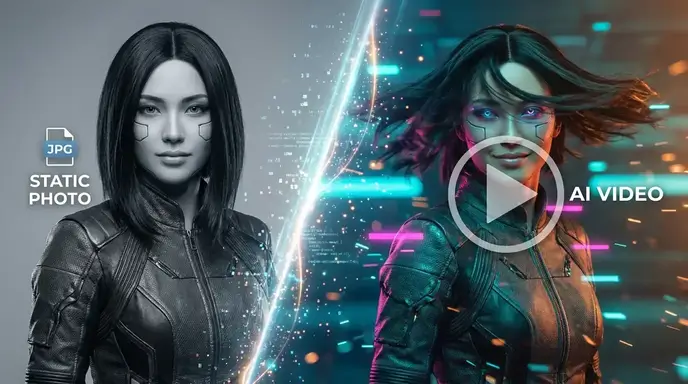
Welcome to the leading grok platform where your static images become dynamic visual content through advanced neural network processing. This powerful tool delivers professional results rivaling commercial alternatives for content creators worldwide. The grok video generator creates stunning clips from photos using sophisticated motion synthesis technology. Whether for marketing campaigns or personal creative projects, this tool delivers exceptional quality without subscription fees or complex software installations required. Experience grok fun mode for engaging content creation.

Prompt
A close-up of a hand holding a knife slicing an apple that looks like transparent glass on a wooden board. An apple made of glass that is extremely realistic and beautiful, resembling a translucent red crystal, is placed on a clean wooden cutting board. The knife smoothly slices through the fruit, creating thin, transparent slices. The sound of the knife cutting through the glass-like fruit is amplified, creating a refreshing ASMR sound. This ASMR video exudes a sense of luxury and elegance, high
Sample Clip
Prompt
Fixed shot, the cat pilot quickly turns its head toward the camera, raises its right hand to salute, then quickly lowers its right hand and turns its head to look ahead.
Sample Clip
Prompt
Disney-style animation, late-night hallway. A man with messy, natural curly hair opens the shoe cabinet, and dense green smoke drifts out from the gap in the cabinet door. The lighting, shadows, and movement adhere to physical logic, with an overall realistic style.
Sample Clip

Grok Generate Video: Why Creators Choose This Platform

This cutting-edge grok platform combines research excellence with practical usability for content creators worldwide. When you grok generate video content, the technology represents the latest evolution in image-to-motion processing with enhanced temporal coherence. Sophisticated neural pathways process source material to create natural movement and fluid transitions. Engineers optimized the system for both quality and speed, producing content suitable for professional distribution across multiple channels and platforms globally.

Grok Video Model Architecture

The grok video model architecture enables customization and local deployment options for developers seeking flexible solutions. Commercial-grade results come without proprietary restrictions or licensing fees. Community feedback drives continuous refinement through transparent development practices. The platform ecosystem supports various integration options for creators seeking flexible production solutions for their projects. Understanding how the grok video model works helps creators maximize output quality. The modular design allows seamless updates and feature additions over time.

Generate with Grok Now

Grok Does Generate Videos in High Quality

Many users wonder does grok generate videos well - and the answer is exceptional motion accuracy and visual clarity. The platform delivers professional output through advanced prediction and scene understanding. The grok video creation process maintains consistent quality across all content types.

Generate with Grok Now

Grok Spicy Mode for Unique Content

Experience grok spicy mode for creative content that stands out from conventional outputs. This feature enables unique artistic expressions through enhanced processing capabilities. Daily limits accommodate most creative workflows while exports include no watermarks for professional presentation. The grok ai spicy features demonstrate enhanced creativity. Every spicy content creator appreciates how this mode unlocks creative possibilities for distinctive visual storytelling.

Generate with Grok Now

Grok AI Online: Three Simple Steps

Step 1: Upload - How to Use Grok Free

Start by uploading JPG or PNG images. Higher quality inputs produce better results. Learn how to get grok free access and begin creating today.

Step 2: Configure Grok Video Generator

Add text prompts to describe camera movements and subject actions. The grok video generator interprets your instructions and applies motion presets for precise control.

Step 3: Download Your Videos

Wondering can grok make videos - yes, in professional 1080p quality. Download your content without watermarks. Access grok ai free download for all your completed projects.

Grok AI Video Generator Free: Applications Across Industries

Discover how professionals leverage grok technology for diverse content needs across marketing, entertainment, education, and social media platforms. The grok ai video generator free tier was designed for versatile commercial and personal applications. The grok image to video capabilities adapt to various creative requirements seamlessly through its flexible architecture. Intuitive controls simplify complex video creation tasks for all skill levels.

Marketing
Entertainment
Education
Social Media

Grok Video for Brand Content

Marketing teams use this platform for rapid content production at scale. Product showcases and promotional materials are created efficiently from existing brand assets. The grok video capabilities transform static imagery into engaging motion content that captures audience attention and drives conversions. Production costs drop significantly while output quality meets professional advertising standards consistently across campaigns. Brands report increased engagement metrics after switching to this solution.

Grok Video Generation: User Testimonials

Professional Results with Grok Videos

This technology transformed our production workflow completely, delivering quality that matches premium commercial tools. The grok AI videos we create now surpass what we achieved with expensive software. Hours of manual editing work are saved through intelligent automation and batch processing capabilities available through this powerful platform.

Dr. Andrew Kim
Research Director

Outstanding Download Experience

The grok AI video quality exceeds expectations for every project we undertake. Clean exports without watermarks or restrictions arrive ready for immediate distribution. Files meet professional quality standards that exceed expectations for a free service consistently. Our team relies on this platform for all video production needs.

Patricia Chen
Marketing Lead

Seamless Workflow Integration

Accessing grok AI free capabilities transformed our content strategy entirely. Integrating these capabilities into our existing workflow was straightforward and well-documented. The platform supports various development environments for quick implementation. Our team now relies on this solution for daily production tasks.

Prof. Thomas Wright
University Professor

Intuitive User Interface

The grok video AI interface is intuitive enough for beginners while offering depth for advanced users. User experience was clearly prioritized during design, requiring no technical expertise for basic operations. Tutorials helped me create professional content immediately after signing up for the first time.

Sandra Lopez
Digital Storyteller

Exceptional Spicy Mode Quality

The grok spicy mode output quality impressed our entire creative team during initial evaluation. Consistent results across varied inputs demonstrate robust underlying architecture. Challenging scenes are handled effectively, making this our standard creation tool for client projects now.

Brian Foster
Creative Manager

Reliable Performance Under Load

The grok generator performs reliably under heavy usage during peak production periods. Quality maintains consistency during high demand times while uptime exceeds competing services. Infrastructure supports professional production schedules for agencies and enterprises consistently.

Amanda Reed
Agency Director

News

Perchance Image to Video: What Actually Works in 2026 (Honest Guide)

Perchance Image to Video: What Actually Works in 2026 (Honest Guide)

Perchance.org pulls in over 40 million monthly visits for its free AI image generation. No sign-up, no watermarks, no credit limits. But the moment you try turning those images into video, everything falls apart. Click any “video generator” on the platform and you’ll likely get a slideshow, a demo-mode popup, or an endless loading screen. The r/perchance subreddit fields this exact question multiple times per day, and the answer is always the same: Perchance has no working native video generation. This guide cuts through the noise. We tested the tools, read the community threads, and built workflows that actually convert your perchance image to video — covering free, paid, and local options for every budget. Does Perchance Have Image to Video? (The Quick Answer) No. Despite what some YouTube tutorials suggest, Perchance cannot natively convert images to video. Understanding why requires knowing how the platform actually operates. How Perchance Actually Works (Community-Built Generators) Perchance isn’t a single product — it’s a platform where anyone can build and publish generators. The AI Image Generator that draws millions of visitors is just one of thousands of community-created tools hosted on perchance.org. This open architecture is what causes the confusion around “Perchance video generators.” Why Perchance Video Generators Don’t Work Most community-built video generators on Perchance fall into predictable categories: empty shells with no backend, demo-mode locks that never produce output, third-party iframe embeds routing to external services with severe rate limits, or simple slideshow makers that cycle through static images. The root cause is economic. Perchance is maintained by a single developer, and video generation requires 10-30x more computational resources than image generation. The infrastructure simply doesn’t exist to support it at Perchance’s scale. Image to Video vs Text to Video on Perchance Neither workflow is natively supported. A handful of semi-functional generators exist — like image-to-video-test (limited to one generation per day) and an LTX wrapper (plagued by runtime errors) — but these are community experiments with external API dependencies, not reliable tools. Best Free Tools to Convert Perchance Images to Video These external tools match Perchance’s free, accessible philosophy and are regularly recommended by the community. AI Image to Video (aiimagetovideo.pro) – Multiple AI Models in One Platform AI Image to Video stands out by offering access to multiple AI models — including Kling, Veo, and Wan — through a single interface. It supports up to 4K output with no watermarks, along with batch processing for creators working at scale. You can customize aspect ratio, duration, and motion intensity, making it a versatile choice whether you’re creating TikTok clips or cinematic animations. Vheer.com – Free and Unlimited The Perchance community’s most-recommended free option. Vheer.com offers unlimited generations with no account required and no watermark on its free tier. It includes camera movement controls and handles ambient animation well — think waves, flickering lights, and subtle motion. Complex movements like walking or running still look unnatural. Meta AI – Best for SFW Content Meta’s free image-to-video tool delivers consistent quality backed by massive data center infrastructure. It’s reliable and produces polished results for safe-for-work content. The trade-off: strict content moderation and a required Meta account. HuggingFace Spaces – Open-Source Option Access cutting-edge open-source models like LTX and FLUX through community-hosted spaces. Completely free, but GPU quotas exhaust quickly — expect “ZeroGPU illegal duration” errors after just one to three videos. Best for experimentation rather than production use. Grok Aurora – Daily Free Generations Grok provides 15-50 free generations per day through the X/Twitter ecosystem. Solid for casual SFW creation, though content restrictions have been tightening recently. Not ideal for bulk production or unrestricted content. Best Paid Tools for Perchance Image to Video When free options hit their limits, these paid tools deliver higher quality and more control. AI Image to Video Pro Features – 4K Output and Batch Processing For creators who need professional-grade output, AI Image to Video offers premium features including 4K resolution, batch processing for high-volume workflows, and the ability to select the optimal AI model per project. Specialized TikTok optimization tools and watermark-free exports make it practical for content creators producing at scale. Pollo.ai – Popular Paid Option A community favorite for reliable image-to-video conversion with motion control capabilities. Uses a credit-based pricing model. Be aware of known iOS image upload bugs and recent tightening of content restrictions that have frustrated some users. Seedance – Camera Movement Controls Offers one-tap image animation with cinematic camera controls including pan, zoom, and tilt. The three-step workflow (upload, animate, export) keeps things simple. A free tier is available, with premium unlocking 4K watermark-free output. Quick Comparison Table: Price, Quality, Features Tool Price Resolution Watermark Sign-up Batch AI Models AI Image to Video Free/Paid Up to 4K No No Yes Kling, Veo, Wan Vheer.com Free Standard No (free) No No Proprietary Meta AI Free HD No Yes No Meta internal HuggingFace Free Varies No Optional No LTX, FLUX Grok Aurora Free HD No Yes No Grok Pollo.ai Paid HD No Yes No Proprietary Seedance Free/Paid Up to 4K Paid only Yes No Seedance How to Convert Perchance Images to Video (Step-by-Step Workflow) Here’s the complete process from generating your image on Perchance to producing a finished video. Step 1 – Optimize Your Perchance Images for Video Better source images produce better video. Use camera model references in your prompts (Canon EOS, Panasonic LX-1000) and phrases like “RAW candid photo” for realism. Select the “No Style” art style to avoid cartoonish output. Choose your aspect ratio intentionally — 16:9 works best for most video formats. Step 2 – Upscale Your Images (Optional but Recommended) Perchance outputs images at 512×512 or 512×768 — well under 1MB. At 1080p, these will show visible pixel stretching. Run your images through a free upscaler before feeding them into any video generator for noticeably sharper results. Step 3 – Generate Your Video with AI Image to Video Upload your Perchance image, select an AI model based on your needs (Kling for complex motion, Veo for cinematic

HappyHorse 1.0 Explained: Features, Advantages & How It Compares to 10 Top AI Video Generators

HappyHorse 1.0 Explained: Features, Advantages & How It Compares to 10 Top AI Video Generators

With dozens of AI video generators flooding the market — each claiming to be the best — creators and marketers face a real challenge. Which tool actually delivers the best visual quality? Which one fits your specific workflow? And which claims are hype versus substance? This guide breaks down exactly what HappyHorse 1.0 is, what makes it stand out, where it fits into real-world workflows, and how it compares head-to-head against 10 leading AI video tools in a single, comprehensive comparison table. What Is HappyHorse 1.0? HappyHorse 1.0 is an AI video generation model that claimed the top position on the Artificial Analysis global AI video leaderboard — the most widely referenced independent benchmark for AI video quality. Unlike models that launch with fanfare from well-known labs, HappyHorse appeared anonymously and let its output speak first. It supports both text-to-video and image-to-video generation, producing native 1080p video with synchronized audio in a single pass. The Origin Story — From Mystery Model to #1 HappyHorse 1.0 first appeared as an anonymous entry on the Artificial Analysis Video Arena, a platform where real users vote in blind A/B comparisons between AI-generated videos. Without any branding or marketing, the model earned the #1 Elo ranking in both text-to-video (1333 Elo) and image-to-video (1392 Elo) categories. Core Technical Specs at a Glance Under the hood, HappyHorse 1.0 is built on a 15B-parameter single-stream Transformer architecture (claimed but not independently verified at the parameter level). Here are the key specs: ● Architecture: Single-stream Transformer with self-attention (Transfusion-style)● Inference: 8-step DMD-2 distillation — significantly fewer denoising steps than most competitors● Output: Native 1080p resolution at 24fps, with multiple aspect ratios● Audio: Joint video and audio generation in a single pass● Lip-sync: Multilingual support across 6 languages● Inference mode: CFG-less (classifier-free guidance not required), reducing compute overhead● Clip duration: Up to 5 seconds per generation Key Advantages of HappyHorse 1.0 What sets HappyHorse apart isn’t just one feature — it’s a combination of capabilities that no single competitor currently matches. Here’s what matters most for creators evaluating their options. #1 Leaderboard Ranking — Verified by Blind User Votes Many AI tools claim to be “the best” based on internal benchmarks or cherry-picked samples. HappyHorse’s ranking is different. The Artificial Analysis Video Arena uses blind A/B comparisons — real users watch two AI-generated videos side by side without knowing which model made which, then vote for the one they prefer. This produces an Elo rating (the same system used to rank chess players) that reflects genuine human preference. HappyHorse 1.0 achieved 1333 Elo in text-to-video and 1392 in image-to-video (without audio), placing it above Seedance 2.0, Kling 3.0, Veo 3, and every other model in the arena. Joint Video and Audio Generation Most AI video generators produce silent video. Want sound effects or voiceover? You need a separate tool — adding time, cost, and complexity. HappyHorse 1.0 generates synchronized audio alongside video in a single pass, including ambient sound effects, environmental audio, and voice. For creators on platforms where audio is essential (TikTok, Reels, YouTube Shorts), this eliminates an entire production step. Only a few competitors offer native audio — notably Seedance 2.0 (which leads in with-audio Elo rankings) and Veo 3. But HappyHorse combines top-tier visual quality with audio in a way most tools cannot. Multilingual Lip-Sync Across 6 Languages Built-in lip-sync capability supporting multiple languages makes HappyHorse particularly valuable for global content creators. Instead of shooting separate versions or manually dubbing content for different markets, you can generate localized video with natural-looking lip movements directly. This is especially relevant for:● Marketing teams running campaigns across multiple regions● E-commerce sellers creating product videos for international platforms● Educational content creators producing multilingual explainer videos No manual dubbing. No third-party lip-sync tools. It’s built into the model. Open Source Promise — Local Deployment Potential One of the most discussed aspects of HappyHorse 1.0 is its planned open-weight release. According to community sources and developer discussions, the team intends to release: ● The base model weights● A distilled version for faster inference● Super-resolution model weights● Inference code for local deployment Important caveat: As of this writing, the weights have not been publicly released. The HuggingFace repository remains empty, and the GitHub repo (brooks376/Happy-Horse-1.0) has been flagged by the community as unofficial. Verify through official channels before trusting any download links. Efficient 8-Step Inference Speed matters when you’re generating video at scale. HappyHorse uses DMD-2 distillation to achieve generation in just 8 denoising steps — far fewer than the 25-50 steps many competitors require. Fewer steps means:● Faster generation per clip● Lower compute costs per video● More practical for batch content creation This efficiency doesn’t come at the cost of quality — the Elo rankings confirm that HappyHorse’s 8-step output still surpasses models running significantly more inference steps. HappyHorse 1.0 vs 10 AI Video Generators — Full Comparison Table This is the section you’ll want to bookmark. Below is a comprehensive side-by-side comparison of HappyHorse 1.0 against 10 leading AI video generation tools, covering the dimensions that matter most when choosing a tool for your workflow. Comparison Criteria Explained Before diving into the table, here’s what each column measures:● Video Quality Ranking: Elo score from Artificial Analysis blind comparisons (where available), or relative benchmark positioning● Max Resolution: Highest native output resolution supported● Max Duration: Longest single clip the model can generate● Audio Support: Whether the model generates audio natively alongside video● Open Source: Whether model weights are available for local deployment● Pricing Model: How you pay — free credits, subscription, per-generation, or API-based● Best Use Case: The scenario where each tool has the strongest competitive advantage The 10-App Comparison Table # Model Developer Quality Ranking Max Resolution Max Duration Audio Open Source Pricing Best Use Case 1 HappyHorse 1.0 Alibaba Taotian #1 Elo (1333 T2V / 1392 I2V) 1080p 5s ✅ Native Planned (open weights) Free credits; ~$1/5s clip Top visual quality + audio 2 Seedance 2.0 ByteDance Former #1; leads with-audio 720p 15s ✅ Via Dreamina ❌ Closed $1–3/gen

Wan Image to Video: Complete Beginner’s Guide to AI Video Generation in 2026

Wan Image to Video: Complete Beginner’s Guide to AI Video Generation in 2026

Picture transforming any photograph into a smooth, cinematic video clip in just minutes—all without spending a dime. That’s exactly what Wan 2.2 delivers, and it’s running the AI video generation world right now. But here’s the catch: most tutorials assume you already know ComfyUI, have a powerful GPU, and understand technical jargon. This leaves many creators frustrated before they even start. This guide changes that. Whether you want to run Wan locally or prefer simpler online alternatives, you’ll learn everything needed to create your first AI video today. What Is Wan 2.2 and Why Is It Revolutionary for Image-to-Video? Understanding this technology opens doors to creative possibilities that were impossible just months ago. Understanding Wan 2.2: The Open-Source Breakthrough Wan 2.2 is a free, open-source AI model from Alibaba that transforms static images into dynamic videos. Unlike subscription-based services, you can run it on your own computer at no cost. The community calls it “mind-bogglingly good” for open-source software. Seven months ago, generating videos this quality locally wasn’t even possible. Why Wan Outperforms Other AI Video Models What sets Wan apart is its exceptional prompt adherence. When you describe what you want, the model actually listens—something competitors struggle with. Key advantages include: Wan 2.2 Model Variants Explained (5B vs 14B) Wan comes in two main sizes: Model Parameters Best For Wan 5B 5 billion Budget GPUs, faster generation Wan 14B 14 billion Maximum quality output The 14B model produces better results but demands more powerful hardware. GGUF quantized versions offer a middle ground, reducing memory requirements while maintaining quality. Hardware Requirements for Wan Image to Video Before investing time in setup, verify your computer can handle the workload. Minimum VRAM Requirements by Model Size If your GPU has less than 8GB, local generation becomes impractical. Consider online alternatives instead. Recommended GPUs for Wan 2.2 For smooth operation, these cards deliver reliable performance: Running Wan on Low VRAM (8GB Solutions) Budget GPU owners aren’t completely locked out. Try these optimizations: How to Set Up Wan 2.2 in ComfyUI (Step-by-Step) This section tackles the biggest pain point users report: the complex installation process. Installing ComfyUI and Required Dependencies Start by installing ComfyUI from the official repository. You’ll need Python 3.10+ and several custom nodes including ComfyUI-WanVideoWrapper. Fair warning: the community jokes that “every update breaks something.” Patience helps. Downloading Wan Models and Checkpoints Get official models from Hugging Face: Verify file integrity after download—corrupted files cause cryptic errors. Loading Your First Wan Image-to-Video Workflow Import pre-built workflows from Civitai to skip manual node configuration. Load your workflow, connect an input image, write a simple prompt, and hit generate. Key Takeaway: Starting with community workflows saves hours of troubleshooting. Wan Image-to-Video Prompting Guide Good prompts make the difference between disappointing and stunning results. Anatomy of an Effective Wan Prompt Structure your prompts with these elements: Example: “Woman in red dress, gentle wind blowing hair, subtle smile appearing, cinematic lighting, slow zoom in” Negative Prompts: What Works and What Doesn’t Users frequently complain that negative prompts get ignored. Wan processes them differently than image generators. Instead of listing everything to avoid, focus on describing what you do want. Positive framing works better than negative lists. Common Prompting Mistakes and How to Fix Them Problem Solution Unwanted mouth movement Specify “closed mouth” or “neutral expression” Color drift Add “consistent colors, stable lighting” Erratic motion Use “subtle movement, gentle motion” Online Alternatives: Wan Image to Video Without ComfyUI Not everyone wants to wrestle with technical setup—and that’s perfectly valid. Why Consider Online Wan Tools? Online platforms eliminate hardware requirements entirely. No GPU needed, no installation headaches, instant access from any browser. This approach suits creators who want results without becoming system administrators. AI Image to Video Pro: Full-Featured Online Solution AI Image to Video provides access to Wan alongside other models like Kling and Veo. The platform outputs up to 4K resolution without watermarks, making it practical for professional content. Social media creators, marketers, and small businesses benefit from the streamlined interface that handles all technical complexity behind the scenes. Comparing Local vs. Online Wan Generation Aspect Local (ComfyUI) Online Platforms Cost Free after hardware Per-generation or subscription Setup Complex None Privacy Complete Varies by provider Hardware needed Yes (8GB+ VRAM) No Advanced Wan Techniques for Better Results Once basics are mastered, these techniques elevate output quality. Using LoRAs to Enhance Wan Output LoRAs are small fine-tuned additions that modify model behavior: First and Last Frame Control This technique lets you define exactly how videos begin and end. Upload a start frame and end frame, then let Wan interpolate the motion between them. Creating Longer Videos with SVI Pro Workflows Wan’s native output length is limited. SVI Pro workflows chain multiple segments together, enabling videos beyond standard clip length through intelligent interpolation. Wan 2.2 vs. Competitors: Which AI Video Generator Should You Use? Understanding alternatives helps you choose the right tool. Wan 2.2 vs. LTX 2.3: Detailed Comparison Feature Wan 2.2 LTX 2.3 Prompt adherence Excellent Poor Native resolution 720p 1440p Frame rate 16fps 24fps Audio generation No Yes Wan wins on quality and consistency; LTX offers higher specs on paper but often fails to follow instructions. Wan vs. Commercial Options (VEO 3, Kling, Runway) Commercial services like VEO 3 and Runway provide polished experiences but charge significant fees. Wan delivers comparable quality for free—if you’re willing to handle setup. Online platforms like AI Image to Video bridge this gap by offering multiple models including Wan with professional output quality. When to Use Which Tool Troubleshooting Common Wan Image-to-Video Issues These solutions address problems users encounter most frequently. VRAM Errors and Out-of-Memory Fixes CUDA out-of-memory errors mean your GPU is overwhelmed. Solutions: Workflow Node Errors and Compatibility Issues Missing nodes or version mismatches cause red error boxes in ComfyUI. Update all custom nodes simultaneously and verify ComfyUI version compatibility with your workflow. Quality Issues: Artifacts, Color Drift, and Flickering Adjust CFG (Classifier-Free Guidance) values if output looks wrong. Lower CFG reduces artifacts; higher CFG strengthens

Best Trump AI Video Generators in 2026: Voice, Lip-Sync & Talking Video Tools Compared

Best Trump AI Video Generators in 2026: Voice, Lip-Sync & Talking Video Tools Compared

Trump AI videos continue to go viral across TikTok, YouTube Shorts, X, and meme communities. Some are simple text-to-speech jokes, while others use talking-photo animation, lip-sync AI, and image-to-video workflows to create polished parody clips. The problem is that not every “Trump AI video generator” does the same job. Some tools are better for generating a Donald Trump-style AI voice, while others are built for talking avatars, lip-sync videos, or cinematic AI scenes. This guide compares the best Trump AI video generators in 2026 based on workflow fit, public features, free-plan access, output style, and creator use cases. Disclosure: This article is for informational, parody, commentary, and educational purposes only. Do not use AI-generated voice or video tools to deceive, impersonate, defame, or mislead audiences. Always follow platform rules, local laws, and election-integrity policies. What Is a Trump AI Video Generator? A Trump AI video generator is a tool or workflow used to create synthetic voice or video content inspired by Donald Trump’s speaking style, facial movement, or public persona. Depending on the platform, this can include: In practice, many creators use more than one tool. A common workflow looks like this: That is why the best tool depends on whether you need voice only, a talking face, or a full parody video. How These Tools Fit Image-to-Video Workflows For a site like aiimagetovideo.pro, it helps to treat Trump AI content as part of a broader talking-video workflow. Here are the three most common creator setups: 1. Voice-Only Workflow Best for: Typical stack: 2. Talking-Photo Workflow Best for: Typical stack: 3. Full AI Video Workflow Best for: Typical stack: If your content starts from a still image, the most important features are lip-sync, facial animation, export quality, and caption support. How We Reviewed These Trump AI Tools For this guide, we compared popular Trump AI video and voice tools based on: Because AI tool capabilities and public-figure policies can change over time, readers should verify the latest features and terms on each official website before using them. Trump AI Voice vs. Talking Face vs. Full Video Tools Before choosing a platform, decide what you actually need: It is also important to note that public-figure voice availability may vary by platform policy, moderation rules, or community-created models. Top Trump AI Video Generators Compared Tool Best For Voice Features Video Features Lip-Sync / Talking Face Free Option Notes FakeYou Free meme-style TTS Strong Limited No Yes Good entry-level voice option ElevenLabs High-quality AI voice Excellent No No Limited Best for premium voice workflows HeyGen Talking avatar videos Good Strong Yes Limited/trial Best for speaking-face content Kling AI Cinematic AI visuals Limited Excellent Workflow-based Limited Strong for polished scenes Runway AI video editing Limited Excellent Workflow-based Limited Better for creators who edit heavily Revid.ai Short-form content Basic Good Template-based Limited Great for TikTok/Shorts workflows Musicfy Audio experiments and covers Good No No Limited Better for audio-first parody EaseUS Beginner-friendly workflow Basic to good Good Some support Trial Easier learning curve Galaxy.ai Multi-tool AI access Varies Varies Varies Freemium Useful if you want multiple AI tools Fameo.ai Celebrity-style novelty videos Basic Template-style Limited Paid Better for personalized message formats 1 FakeYou Donald Trump TTS Best for: free Trump-style text-to-speech and quick meme audio FakeYou is one of the most recognizable community-based TTS platforms for parody and entertainment content. If you are specifically looking for a Trump AI voice generator free option, FakeYou is often one of the easiest places to start. Pros Cons Best use case Use FakeYou when you want fast voice output, then pair it with a talking-photo or lip-sync tool. 2 ElevenLabs Trump Voice Workflow Best for: realistic AI narration and high-quality voice output ElevenLabs is one of the strongest choices if your top priority is voice realism. It is not a Trump AI video generator on its own, but it works extremely well as the audio layer in a broader image-to-video or talking-face workflow. Pros Cons Best use case Choose ElevenLabs if your workflow starts with audio and you care most about clean, realistic voice output. 3 HeyGen Trump Talking Video Workflow Best for: talking avatars and speaking-face videos HeyGen is one of the best options if you want a face-driven delivery format. It is especially useful for creators making short talking-head style clips for social media. Pros Cons Best use case Use HeyGen when your goal is a clean talking-face parody video rather than a meme-style montage. 4 Kling AI Best for: polished AI-generated visuals and cinematic parody scenes Kling AI is frequently mentioned in AI creator communities for its high-quality visual generation. It is better suited to stylized AI video scenes than simple text-to-speech memes. Pros Cons Best use case Choose Kling AI if you want more visually impressive AI parody content and are willing to use a multi-tool workflow. 5 Runway Best for: creators who want editing control and advanced AI video tools Runway is less of a single-click Trump generator and more of a creative workspace for AI video creation and editing. It is a strong choice for creators who want more control over cuts, pacing, captions, and final output. Pros Cons Best use case Use Runway if you want to build a more finished video rather than just generate voice output. 6 Revid.ai Best for: fast social content and short-form templates Revid.ai is useful for creators who care more about speed than deep manual editing. If your main distribution channel is TikTok, Reels, or Shorts, template-based workflows can save a lot of time. Pros Cons Best use case Choose Revid.ai if you want to turn parody ideas into publish-ready short-form videos quickly. 7 Musicfy Trump AI Voice Workflow Best for: parody songs, audio experiments, and voice-based content Musicfy is more audio-focused than video-focused. It can be useful for creators making Trump-style song covers, comedic remixes, or stylized voice experiments. Pros Cons Best use case Use Musicfy for voice-first content, parody music, or short comedic audio clips. 8 EaseUS Best for: beginner-friendly media workflows EaseUS can be useful for creators who want a simpler entry point into AI media creation and editing. It is not

Sora Video to Prompt: How to Write Better Sora Prompts

Sora Video to Prompt: How to Write Better Sora Prompts

You see a great AI video and think, That’s the style I want. Then you write a prompt, hit generate, and get something that feels only loosely connected to the idea in your head. That gap is exactly why Sora video to prompt matters. Most people do not fail because they lack imagination. They fail because they do not know how to extract prompt from a video by breaking it into subject, setting, action, and camera style. Once you learn that process, writing clearer Sora prompts becomes much easier, and your results become far more controllable. What “Sora Video to Prompt” Really Means At first glance, Sora video to prompt sounds like a simple conversion task: watch a clip, describe what you see, and turn that into text. In practice, it is more specific than that. You are not just describing a scene. You are translating a video into prompt language. That means identifying four core elements: This is also the foundation of how to write effective prompts for Sora AI video generation. Strong prompts do not dump random details onto the page. They organize visual information in a way that helps the model make better choices. A weak prompt often sounds like this: “A woman walking in a city at night, cinematic.” That tells Sora almost nothing useful. What kind of city? What kind of woman? Is she moving fast or slowly? Is the camera static or tracking? Is the mood glossy, moody, realistic, dreamy? The more gaps you leave, the more the model improvises. How to Write Effective Prompts for Sora AI Video Generation If you want more reliable outputs, use a simple structure: Subject + Setting + Action + Camera/Style This is much easier to manage than trying to write one huge paragraph full of adjectives. Here is how each part works. Subject Start with the visual anchor. Be concrete. Instead of “a man,” write something like:“a man in his 30s with short dark hair, wearing a charcoal coat and black gloves” Instead of “a product,” write:“a matte black skincare bottle with a silver cap placed on a marble counter” The point is not to overload the description. It is to give Sora enough detail to avoid generic results. Setting Now place the subject somewhere real. This is where many Sora prompts stay too vague. “In a city” is weak. “On a rain-soaked street in Tokyo at night, neon reflections glowing on wet pavement” is much stronger. Good setting details do more than name a location. They establish atmosphere. Action This is the part most users overcomplicate. For short clips, one main action is usually enough. If you ask for too many beats in one prompt, motion becomes messy. “She walks to the door, opens it, turns around, smiles, and runs outside” is too much for one shot. A better version would be:“she walks slowly toward the camera while glancing at her phone” Clear action almost always beats ambitious action. Camera and style This is the difference between “something happened” and “this looks intentional.” You do not need film-school language, but you do need direction. Mention shot type, camera movement, and visual mood when relevant. For example:“medium tracking shot moving backward, soft cinematic lighting, shallow depth of field, cool desaturated tones” That instantly gives the model a more usable framework. Weak prompt vs better prompt Weak prompt:A woman walking in a city at night, cinematic. Better prompt:A woman in her 30s with short black hair and a red wool coat walks toward the camera on a rain-soaked Tokyo street at night, neon signs reflecting in the wet pavement, medium tracking shot moving backward, soft cinematic lighting, shallow depth of field, cool desaturated tones. The second version is not stronger because it is longer. It is stronger because each part has a job. A Simple Sora Video to Prompt Workflow If you already have a video idea, or you are trying to reverse-engineer a clip you like, this workflow keeps things simple. Step 1: Identify the visual anchor Ask yourself: what is the viewer supposed to notice first? The person? The product? The environment? That is your subject. Step 2: Reduce the shot to one main action Do not write a whole sequence yet. Focus on a single visual beat. One movement is easier to control than four. Step 3: Add the environment and mood Now build the setting around the action. Think time of day, weather, lighting, color, background texture, and overall atmosphere. Step 4: Add camera direction This is where the shot becomes more cinematic. Decide whether it is a close-up, medium shot, or wide shot. Decide whether the camera is static, panning, tracking, or handheld. Step 5: Rewrite for clarity Before generating, cut filler words. If a phrase does not help the model see the shot more clearly, remove it. This same process also helps when using a Sora AI prompt generator. Prompt tools can speed up drafting, but they work much better when you already know the subject, action, and camera logic you want. Prompt Examples for Common Sora Use Cases Here are two practical examples you can adapt. Example 1: Cinematic short scene A young man in a dark navy coat stands alone on a rooftop at sunrise, wind moving through his hair, the city skyline glowing softly in the background, slow push-in camera movement, cinematic lighting, warm orange highlights, cool shadows, dramatic but realistic mood. This works because it stays focused. One subject, one environment, one visual emotion. Example 2: Sora AI Prompts for Faceless Content Not every creator wants character-driven videos. Many people are making tutorials, product demos, desk videos, cooking clips, and workflow content. That is where Sora AI prompts for faceless content become useful. Example prompt:Close-up of two hands assembling a minimalist desk setup on a wooden table, soft natural morning light from a nearby window, clean modern workspace, smooth overhead camera shot, calm premium lifestyle aesthetic. This kind of shot works well for creators who want polished

Kling 2.1 or Veo 3? A Deep Dive Into Quality, Physics, and Cost Comparison

Kling 2.1 or Veo 3? A Deep Dive Into Quality, Physics, and Cost Comparison

Every single credit matters! Should I use Kling 2.1 or Veo 3 when I try to generate AI videos? Choosing between a less than $10/month plan and a $250/month premium option isn’t just about price—it’s about understanding exactly what you get for your money. Both models were released around May 2025 — one a representative example of a “Made in China” innovation, the other a generative AI system developed under the U.S. tech giant Google. Let’s explore them in practice and find the one that best fits your needs. Quick Overview: Kling 2.1 vs Veo 3 at a Glance Before diving into detailed analysis, here’s what separates these two AI video generators at the fundamental level. Feature Kling 2.1 Veo 3 Monthly Cost $9 (Standard)~$180(Ultra) $7.99~$250 Max Resolution 10 4K Max Duration 10 seconds 60 seconds Native Audio No Yes Availability Global Limited regions Start/End Frame Yes No Kling 2.1 serves budget-conscious creators who prioritize image-to-video workflows. It’s ideal for social media content creators, marketers producing short-form clips, and anyone who can work around the lack of native audio through post-production. Veo 3 targets premium production environments where 4K resolution, longer-form content, and native voice/sound generation justify the steep monthly investment. Think commercial productions, high-end marketing agencies, and creators for whom audio sync is non-negotiable. Quality and Physics Analysis Understanding the tangible differences in output quality helps justify—or question—the price gap between these tools. Visual Output Quality Comparison Kling 2.1 outputs at 720p (Standard) or 1080p (Professional mode), while Veo 3 sometimes can reach 4K resolution. This resolution difference matters most for large-screen displays and professional broadcast work. In practical terms, Kling 2.1’s 1080p output holds up well for social media platforms, web content, and most digital marketing applications. The detail rendering is sharp, with minimal visible artifacts in standard generation scenarios. Veo 3’s 4K capability provides noticeably superior fine detail—individual hair strands, fabric textures, and environmental elements render with more precision. However, on some platforms and APIs that integrate Veo 3, the default output resolution may be limited to 720p or 1080p, while 4K generation typically requires a specific plan, version upgrade, or manual configuration. Motion Realism and Physics Accuracy Physics simulation represents one of the most telling quality indicators in AI video generation. Both models handle basic motion competently, but differences emerge in complex scenarios. Kling 2.1 excels at character consistency and handles standard human movement well. Reddit users consistently praise its image-to-video consistency, noting that reference images translate faithfully to video output. However, complex physics—fluid dynamics, cloth simulation with wind, and multi-object interactions—can produce occasional artifacts. Veo 3 demonstrates more sophisticated physics handling overall. Gravity behaves more naturally, object interactions feel more realistic, and natural motion sequences (walking, running, environmental interaction) show fewer uncanny valley moments. That said, community feedback reveals that Kling 2.1’s physics have improved significantly from earlier versions, particularly for the start/end frame feature where motion interpolation has become notably smoother. Prompt Adherence and Consistency How accurately each model follows your creative direction matters enormously for production efficiency. Kling 2.1’s strength lies in image-to-video prompt adherence. When you provide a reference image, the model maintains subject fidelity with impressive consistency. Character features, clothing, and environmental details transfer reliably. Text-to-video prompts, however, show more variability—the model sometimes interprets prompts loosely. Veo 3 offers stronger text-to-video prompt adherence, following complex written descriptions more literally. This reduces regeneration cycles when working from scripts or storyboards without reference images. [Image: Side-by-side comparison showing same prompt executed on both Kling 2.1 and Veo 3] Native Audio Capabilities This represents the most significant feature gap between the two tools. Kling 2.1 does not generate native audio. Every video requires post-production audio work—voice-over recording, sound effect layering, or music addition. For many creators, this means additional time and potentially additional tool subscriptions (ElevenLabs for voice, audio libraries for effects). Veo 3 generates synchronized voice and sound directly within the video generation process. Lip-sync accuracy is built-in, ambient sounds match visual content, and the workflow from prompt to finished video is substantially shorter. For creators producing dialogue-heavy content, Veo 3’s native audio eliminates hours of post-production work per project. For those creating visual-only content or who already have established audio workflows, this gap matters less. Cost-Efficiency Analysis Raw price comparison tells only part of the story. Understanding true cost requires examining credit systems, regeneration patterns, and total cost of ownership. Pricing Structure Breakdown Kling Plans: Plan Monthly Cost Credits Included Free $0 66 credits/day Standard ~$10 ~660 credits/month Pro ~$37 ~3,000 credits/month Premier ~$92 ~8,000 credits/month Ultra ~$180 ~26,000 credits/month Veo 3 operates on Google’s Gemini AI tier at approximately $8~$250/month, with usage-based consumption within that allocation. Credit System and Consumption Rates Understanding Kling’s credit consumption is essential for calculating true costs: On the Standard plan (~660 credits/month), this translates to: The Pro plan’s ~3,000 credits yield: Regeneration and Iteration Costs Real-world video production rarely produces perfect results on the first attempt. Regeneration costs significantly impact total spend. Based on community feedback from r/KlingAI and r/aivideo, creators typically require 2-4 generation attempts to achieve their desired output. This means your effective video count drops: Veo 3’s higher first-attempt success rate (due to better prompt adherence) partially offsets its premium pricing for high-volume producers. However, for casual creators, the regeneration overhead on Kling remains more cost-effective. Kling 2.1 VS Veo 3 Output: Practical Comparison Theoretical comparisons only go so far. The clearest way to evaluate these tools is running identical prompts through both models. Both Kling 2.1 and Veo 3 are accessible through AI Image to Video, which allows creators to test different models without maintaining separate subscriptions. This is particularly valuable given that free trail of Veo 3 is not easily accessible through Google directly. Using this prompt as an example, I generated results with different models while keeping the same first-frame image: A woman wearing traditional Han Dynasty quju ruqun (curved-hem robe and skirt) stands on top of a sand dune. Her hair is styled in an authentic Han Dynasty updo. Endless rolling desert dunes stretch into the distance, beneath a vast sky. On the far horizon, a faint sandstorm

Grok Video FAQs: Common Questions Answered

What is grok video generation technology?

Grok video generation is an advanced model developed using neural networks trained on extensive datasets. The technology understands motion, composition, and visual storytelling principles. The platform produces professional-quality output from static source images through sophisticated processing algorithms. This approach ensures consistent quality across diverse content types. Processing times remain fast while maintaining exceptional visual fidelity throughout the creation process.

Is the AI video generator grok truly free?

Yes, access the AI video generator grok core features free without payment requirements through the standard tier. Daily credits accommodate most creative workflows while exports include no watermarks. Accessibility was designed to support all creators regardless of budget with downloads unrestricted for commercial and personal use.

How does grok AI video generation compare?

The grok AI video generation platform stands among the best options available today, competing favorably with proprietary commercial solutions on quality metrics. Superior accessibility comes without compromising output standards. Community contributions drive continuous improvement while consistent quality spans diverse content types effectively.

What formats does grok image video generator support?

The grok image video generator accepts JPG, PNG, and WebP image inputs for processing through the platform. Upload grok pictures in any standard format for instant transformation. MP4 output in various resolutions is produced with 1080p as standard export quality. Multiple aspect ratios support different platform requirements while both landscape and portrait orientations are handled effectively.

Can grok make AI videos for complex scenes?

Yes, can grok make AI videos for complex scenes with multiple subjects? Complex scenes are processed effectively through advanced scene understanding. Training covered diverse scenarios including crowds, landscapes, and intricate environments. Motion patterns are managed accurately while the platform improved handling of challenging compositions significantly.

How to use grok 4 for free?

Learning how to use grok 4 for free begins with creating an account on our platform. The free tier provides generous daily limits for most creative workflows. Both versions support identical input formats with the latest recommended for most tasks. Premium options exist for high-volume production needs.

Is the grok video creation suitable for commercial use?

Yes, grok video creation is fully supported for commercial production with content suitable for advertising and marketing purposes. Exports meet professional distribution standards across broadcast and digital channels. Rights remain with creators for commercial exploitation while licensing supports business applications effectively. Professional studios and marketing agencies trust this platform for client deliverables worldwide.

Where can I access grok AI online?

Access grok AI online through this website directly without software installation requirements. The interface operates entirely through web browsers across desktop and mobile devices. Online availability ensures consistent global access through reliable cloud infrastructure supporting creators worldwide.

What makes grok AI generator unique?

The grok AI generator combines accessibility with professional quality that distinguishes it from competitors. Built on cutting-edge research similar to the elon musk AI video generator vision, this platform enables customization for specific requirements. Commitment to open principles differentiates this platform significantly from commercial alternatives in the market today.

How do grok spicy mode videos work with downloads?

Grok spicy mode videos offer enhanced creative capabilities with unique processing approaches that make content stand out. Use the grok AI free download feature to save completed projects directly to your device without watermarks. All content rights remain with creators for both commercial and personal distribution.