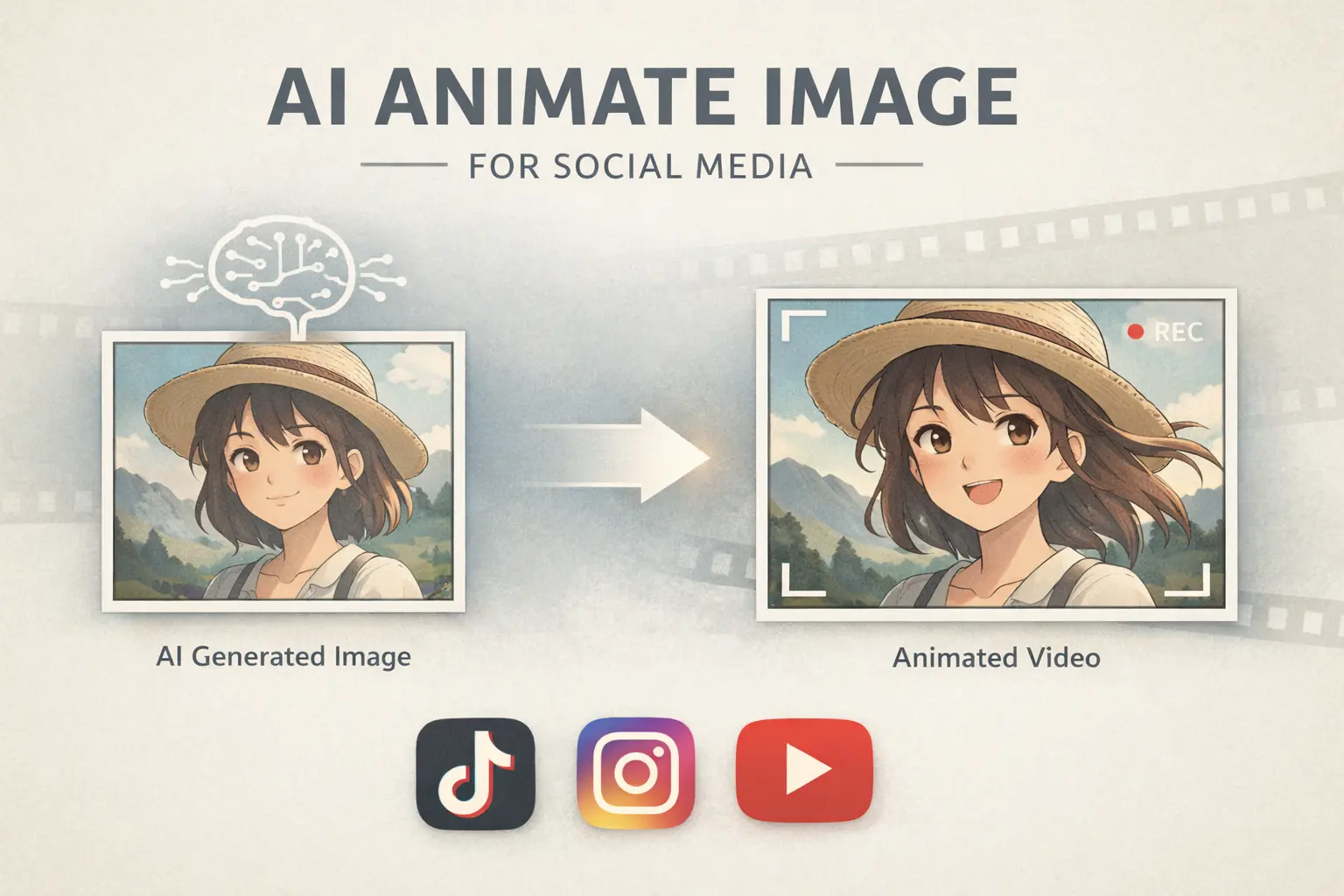
Meta Description: AI animate image content for TikTok, Instagram, and YouTube with platform-specific tips, tools, and strategies to boost views and engagement.
AI-animated content is everywhere right now. Talking photos, stylized character clips, animated product shots, old-photo revivals—these formats are taking over short-form video feeds because they do one thing extremely well: they make people stop scrolling.
But here’s where many creators get it wrong. They use the same AI animation idea on every platform and expect the same results. That rarely works.
TikTok, Instagram, and YouTube may all reward video, but they do not reward the same kind of video in the same way. TikTok likes speed, surprise, and trend energy. Instagram prefers polish and visual consistency. YouTube gives you room to build both discovery and long-term audience value.
So if your goal is to AI animate image content and actually get more reach, you need a platform-specific strategy.
This guide breaks down what works on each platform, which tools make the process easier, and how to turn static images into content people will actually watch.
Why AI-Animated Content Performs So Well
Static images can still work, but motion has a built-in advantage. In crowded feeds, movement grabs attention faster than a still frame. Even subtle motion—a blink, a head turn, drifting hair, a product glowing in light—can create that split-second pause that matters.
And on social media, that pause is everything.
Most major platforms watch the same core signals: how quickly someone stops, how long they stay, whether they rewatch, and whether they interact. AI animation helps on all four. It adds movement, mystery, and often a small “wait, is this real?” moment that keeps people watching longer.
That is why animated image content often beats static posts in watch time, retention, and shareability.
But the real win is not animation alone. It is using the right kind of animation for the platform you are posting on.
Choosing the Right Tool to AI Animate Image Content
There is no single best tool for every creator. The right choice depends on your workflow, budget, and how much control you need.
Premium tools such as Kling, Runway, and Veo usually deliver smoother motion, better prompt response, and more polished results. They are often the best fit for brands, agencies, and creators who care about output quality and consistency.
Free or open-source options like Wan and ComfyUI can be powerful, especially for advanced users. The tradeoff is setup time. In many cases, the “free” route costs you more effort, more hardware, or both.
Then there are all-in-one platforms that bring multiple models into one place. For creators posting across several channels every week, that kind of setup can be faster than jumping between tools. Batch generation, watermark-free export, and easy ratio switching matter a lot more once content volume goes up.
The bigger point is this: do not choose your animation tool based only on hype. Choose it based on what you publish most often. A talking portrait creator needs something different from a product marketer or a faceless storytelling channel.
TikTok: Fast, Trend-Led, and Hook-Driven
TikTok is where AI animation often explodes first. But it is also the easiest place to miss because the platform moves so fast.
What works here is not just “good animation.” It is animation that feels native to TikTok culture. That usually means strong visual payoff, a clear concept, and a fast start.
Talking-photo content, anime-style transformations, 3D cartoon looks, and old-photo revivals all do well because they create instant curiosity. Something familiar becomes something unexpected. That transformation is the hook.
For TikTok, shorter usually works better. A 7-to-15-second clip can outperform a much longer one because completion rate matters so much. Vertical format is essential, and your first second has to do real work. No slow intros. No long setup. Start with movement or the final result.
A good TikTok workflow often looks like this: start with a strong image, animate one key element, add a voiceover or trending sound, then finish with captions inside CapCut or another editor. The best clips feel simple, but they are built around one highly watchable moment.
Faceless creators can do especially well here. AI-generated characters, animated memes, before-and-after edits, or reaction-style visuals all fit naturally into TikTok’s pace. The challenge is consistency. If you want the same character across multiple videos, you will need tighter prompts, reference images, and sometimes extra cleanup in editing.
TikTok rewards energy. So even if your animation is subtle, the idea behind it needs to be obvious right away.
Instagram: Cleaner, More Polished, More Aesthetic
Instagram is not TikTok with a different logo. The content standards are different.
On Instagram, AI animation tends to work best when it looks intentional and visually cohesive. Reels are still the main discovery engine, but the content often performs better when it feels polished rather than chaotic.
That means smoother transitions, cleaner color grading, and motion that supports the image instead of overpowering it. On TikTok, a wild animation can win because it feels surprising. On Instagram, that same clip can feel messy.
Reels are best for reach. Stories are better for maintaining connection with your current followers. Feed videos still matter too, especially because the cover frame affects how your profile grid looks. That is easy to forget, but it matters a lot on Instagram.
If you plan to AI animate image content for Instagram, think about the thumbnail before you even generate the motion. The first frame should look good as a still image. Then the animation should feel elegant, not random.
Subtle motion often works surprisingly well here. A fashion image with moving hair, a travel scene with drifting clouds, a beauty shot with a slight camera push, or a product still with lighting shifts can outperform a louder effect because it matches Instagram’s visual language.
Instagram also gives you native tools you can layer on top of externally generated clips. That combination works well. Let the AI create the motion, then use Instagram’s own text, music, stickers, and post formatting to make the final content feel platform-native.
YouTube: Build Discovery and Depth at the Same Time
YouTube gives AI animation a different kind of value. It is not just about quick views. It is about creating a system.
Shorts are great for reach. They help new viewers discover your style, your characters, or your niche. A short animated transformation, a visual story clip, or a side-by-side tool demo can all work well in that format.
But YouTube also gives you something TikTok and Instagram are less built for: long-form depth.
That matters because AI animation is not only entertainment. It is also process, education, and comparison. You can turn one image-to-video workflow into a tutorial, a review, a compilation, or a storytelling series. That opens the door to stronger watch time, better search traffic, and more monetization options.
A smart YouTube strategy usually combines both. Use Shorts to get attention. Then use longer videos to explain how you made the animation, compare tools, or build a recurring visual format people come back for.
Monetization depends on originality. Pure AI output with no human input is a weak content strategy anywhere, but especially on YouTube. The safer approach is to add commentary, editing, narrative structure, or clear creative direction. That makes the content more useful for viewers and more defensible as original work.
So for YouTube, do not just think about how to make an image move. Think about how to turn that moving image into a repeatable content format.
What Actually Boosts Engagement Across All Platforms
Some things work almost everywhere.
First, transformation content performs well. People like seeing a still image become something alive, expressive, or cinematic. That before-and-after feeling is easy to understand and easy to share.
Second, real object or subject motion tends to beat fake camera movement. If your tool is only zooming into a still image, viewers notice. Animation feels stronger when a face speaks, a hand moves, eyes shift, smoke drifts, or clothing reacts naturally.
Third, the hook matters more than the complexity. Many creators over-focus on model quality and under-focus on the first two seconds. A decent animation with a strong concept will often outperform a technically better one with a weak opening.
And finally, repurposing matters. One animation should not live on only one platform. Generate the highest-quality version you can, then adapt it for different aspect ratios, captions, and CTAs. The same visual can be positioned as a trend clip on TikTok, an aesthetic Reel on Instagram, and a tutorial teaser on YouTube Shorts.
That is how content output scales without burning you out.
FAQs
What is the best way to AI animate image content for social media?
Start with one image that already has a clear focal point, then animate only what adds meaning. A face, a product detail, hair, hands, or background atmosphere usually works better than trying to animate everything at once. Then tailor the final edit to the platform.
Are free AI animation tools good enough?
Sometimes, yes—but usually with tradeoffs. Free tools can be fine for testing ideas or making simple clips. But once you care about consistency, cleaner motion, better exports, or no watermark, paid tools usually save time and frustration.
How do I keep the same character across multiple scenes?
Use the same reference image whenever possible, keep your prompt wording consistent, and avoid changing too many visual details at once. Even then, you may need manual fixes in editing. Character consistency is still one of the hardest parts of AI animation.
Can AI-animated videos be monetized?
Yes, as long as the content includes real creative input. Editing, storytelling, commentary, visual direction, and original formatting all help turn AI output into creator-led content rather than generic generated media.
Final Thoughts
The opportunity here is real, but the strategy has to match the platform.
TikTok rewards speed, surprise, and trend awareness. Instagram rewards polish and visual taste. YouTube rewards creators who can turn a cool animation into a useful content system.
So the goal is not just to animate image with AI. The goal is to animate with purpose.
Start with one platform AI Image to Video. Learn what kind of motion your audience responds to. Keep your hooks stronger than your effects. Then scale from there.
Because in social media right now, static is easy to skip. Motion is what makes people stop.