AI ASMR channels are pulling in 100K+ views per day, and one creator earns $7,500/month selling prompt packs — not from YouTube ads. You don’t need a camera, microphone, or even your face on screen.
New creators see AI ASMR blowing up but don’t know which video ideas actually work or how to turn views into income. This guide covers the best AI ASMR video ideas for 2026 with realistic monetization paths, platform strategy, and beginner mistakes to avoid so you can pick a niche and start earning.
Why AI ASMR Is a Real Money Opportunity in 2026
AI ASMR is one of the fastest-growing content niches on YouTube and TikTok. Two things changed: the tools got dramatically better, and audiences for “oddly satisfying” content exploded. That said, ASMR ad RPM sits around $1–3, so smart monetization matters more than raw views.
What Changed: AI Tools Now Generate Video and Sound Together
Tools like Google Veo 3 now generate native synchronized audio with video, removing the biggest barrier to ASMR creation. Platforms like AI Image to Video give creators access to multiple AI models (Kling, Veo, Wan) with 4K output and no watermarks, making professional-quality content accessible without expensive software. This shift is why the niche exploded in late 2025.
Why the Opportunity Is Still Early for Beginners
AI ASMR was ranked as a low-saturation faceless niche in 2026 creator surveys. Glass cutting is maturing, but survival ASMR, dream beds, and newer formats are still wide open. Traditional ASMR channels have years of head start — AI ASMR channels don’t, which levels the playing field for newcomers.
Best AI ASMR Video Ideas That Make Money
Here are the proven AI ASMR video ideas with real audience demand, organized by format with monetization angles for each.
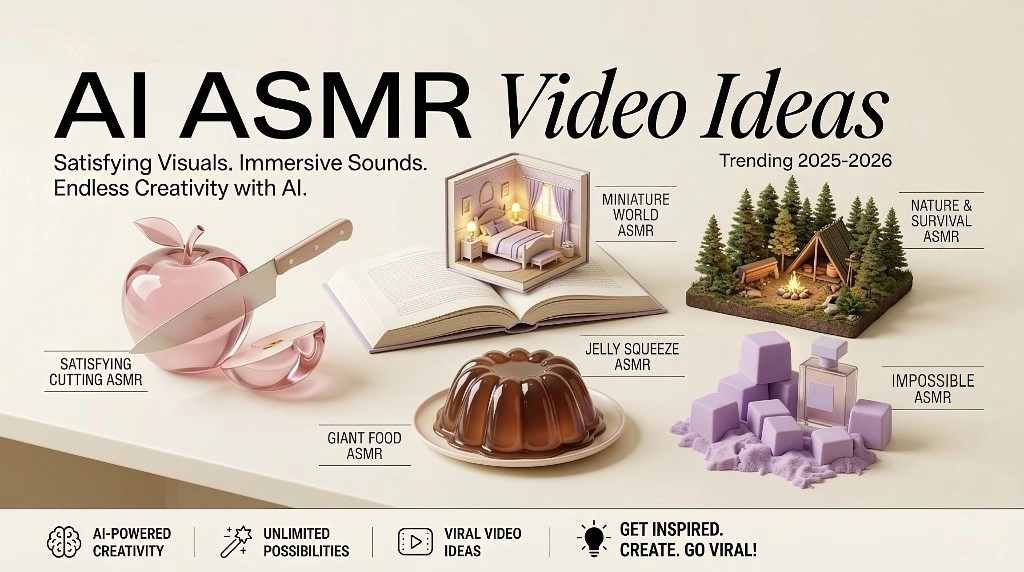
Satisfying Glass and Object Cutting ASMR
This is the most established AI ASMR format. A knife slicing through a translucent glass apple, soap being carved in slow motion, crystals cracking — content that’s physically impossible to film in real life. Prompts and tutorials are widely available, making it the easiest entry point for beginners. Monetize through YouTube Shorts and TikTok at scale, affiliate links to AI tools, and selling prompt packs. Competition is growing, but views remain massive.
Dream Bed and Fantasy Room ASMR
The “which dream bed would you choose?” format drives huge comment engagement. Viewers pick favorites from magical crystal rooms, glowing nature beds, and cozy fantasy environments. One 6-month-old channel hit 138,000 views in a single day with this format. The forced-choice mechanic means comments pile up, which boosts algorithmic reach. Pair with affiliate links to sleep products or AI tools.
Survival and Nature ASMR
Forest building, jungle shelters, wilderness cooking — all generated with AI. This is the fastest-growing AI ASMR sub-niche in 2026, with tutorial videos hitting 248K+ views in just two months. Long-form ambient videos (1–3 hours) earn steady watch time for sleep audiences, while Shorts clips drive discovery. Affiliate opportunities include outdoor gear and meditation apps.
Food and Cooking ASMR
AI-generated food preparation sounds, texture-focused eating, and cooking ASMR remain consistently popular. The niche has evolved from excess-focused mukbang toward texture-focused content in 2026. Surreal impossible food — giant gummy meals, golden chocolate — performs especially well because AI creates what real kitchens can’t.
Luxury Product, Kinetic Sand, and Transformation ASMR
This groups together the “oddly satisfying” category: kinetic sand molding, luxury product unboxing, slime stretching, and satisfying transformations. These formats are TikTok-native and perform well in short-form. Monetize through luxury brand affiliate programs and prompt template sales. AI character ASMR — where AI-generated personas deliver whispered content — is also emerging as a sub-niche worth watching.

How to Turn AI ASMR Videos Into Income
ASMR RPM is $1–3, so you need millions of monthly views to live on ad revenue alone. The creators earning real money diversify early.
Ad Revenue from YouTube Shorts and TikTok
Post 8–12 second clips to identify winners, then expand top performers into longer compilations for better watch time and higher ad rates. YouTube’s AI content policy allows monetization for value-added content, but template clones with tiny swaps get flagged as inauthentic.
Selling Digital Products and Prompt Packs
Every popular AI ASMR tutorial’s top comment is someone asking for the prompt. That’s your market. Prompt packs sell for $5–$15 each. One documented creator earns $7,500/month from tutorials and prompt packs, not ad revenue. Patreon memberships with exclusive prompts are another proven model.
Affiliate Marketing and Brand Partnerships
Link to AI tools, sleep and relaxation products, meditation apps, and niche-matching products — camping gear for survival ASMR, skincare for spa ASMR. Creators using platforms like AI Image to Video with batch processing and multi-model access can mention workflow tools naturally, building affiliate opportunities into each video description.
Choosing the Right Platform for Your AI ASMR Content
Don’t spread thin across every platform. Pick one primary channel and expand after you find traction.
TikTok and Instagram Reels (Discovery and Growth)
Best for 8–60 second clips of satisfying cutting, transformation, and “oddly satisfying” content. TikTok’s algorithm surfaces new creators faster than any other platform. Keep in mind that TikTok requires a 1-minute minimum for Creator Fund monetization.
YouTube Shorts and Long-Form (Monetization and Watch Time)
Shorts work for discovery and testing ideas. Long-form (10–60+ minutes) works for ambient and sleep ASMR with higher ad rates. The Shorts-to-long-form pipeline is the proven growth strategy: seed with short clips, then expand winners into full-length content.
Affiliate Blogs and Niche Websites
Repurpose AI ASMR content into blog posts — tool reviews, prompt libraries, “best ASMR for sleep” roundups — that earn affiliate commissions. This diversifies income beyond platform-dependent ad revenue.
Common Mistakes Beginners Make With AI ASMR
Knowing what doesn’t work saves you months. These mistakes kill channels in their first 90 days.
Posting Mass-Produced Identical Videos
YouTube’s “inauthentic content” policy specifically targets channels posting template clones with tiny swaps — same rain sound, different thumbnail. Each video needs a distinct creative element. Quality and variety beat volume every time.
Ignoring Audio-Video Sync Issues
The #1 technical complaint about AI ASMR is imperfect audio-video synchronization. A cutting sound that lands 200ms late breaks the ASMR effect. Always preview with headphones before publishing, and consider layering real foley sounds over AI-generated video for better results.
Relying Only on YouTube Ad Revenue
At $1–3 RPM, you need millions of views per month to earn meaningful ad income. Build monetization into your strategy from day one — prompt packs, affiliate links, and community memberships should not be afterthoughts.
Targeting the Traditional ASMR Community
The established ASMR community (r/asmr, 2.3M+ members) actively rejects AI content. Users block channels using AI thumbnails. Instead, target the “oddly satisfying” and relaxation viewer segment — casual viewers who enjoy the content without caring whether it’s AI-generated.
FAQs About AI ASMR Video Ideas
Can you really make money with AI ASMR videos?
Yes, but set realistic expectations. YouTube ad revenue for ASMR sits at $1–3 RPM, meaning you need high view volumes. The bigger earning potential comes from selling digital products like prompt packs, affiliate marketing, and community memberships. One documented creator earns $7,500/month from tutorial and prompt pack sales alone.
What is the best AI tool for making ASMR videos?
Google Veo 3 is the current gold standard because it generates synchronized audio with video. Kling AI is the most popular alternative with a free tier. For audio, ElevenLabs handles voice generation, and CapCut is the most widely used free editor for post-production.
Will YouTube demonetize AI ASMR channels?
YouTube monetizes AI content that adds genuine value. What gets flagged: identical template videos with noun swaps, regurgitated content, and low-effort slideshows. What stays safe: original creative concepts, unique visual styles, and real audience engagement. Most AI ASMR — surreal glass fruits, fantasy beds — clearly isn’t real footage, so it doesn’t require realistic-media disclosure.
Do I need a camera or microphone to start?
No. AI ASMR is one of the few content niches where you can create professional-quality videos entirely with AI tools. You need a computer or phone, an AI video generator, and a free editor like CapCut. Some creators layer real foley sounds over AI video for better quality, but it’s not required to get started.
Which AI ASMR niche should a beginner start with?
Glass cutting ASMR is the easiest because prompts and tutorials are widely available, but competition is increasing. For lower competition with strong growth, consider survival ASMR or dream bed “which would you choose” videos. Pick one niche, publish consistently for 30 days, and use Shorts to test which ideas gain traction before committing to long-form.
Conclusion
AI ASMR is a legitimate content opportunity in 2026 for creators who approach it strategically. The best ideas — glass cutting, dream beds, survival scenarios, food ASMR, and satisfying transformations — work because they deliver content impossible to film in real life. Smart monetization means diversifying beyond ad revenue into digital products, affiliates, and community building.
Ready to start? Pick one idea from this guide, generate your first clip with a tool like AI Image to Video, and post it as a YouTube Short or TikTok today. Your first video won’t be perfect — but the creators earning real money all started with one imperfect clip.