
If you want to know how to become a UGC creator in 2026, the honest answer is this: you do not need a huge following, a perfect setup, or a “creator lifestyle” persona. You do need a clear idea of what brands are buying, what a starter portfolio should look like, and how to make content that feels usable. That is the real entry point now. This guide breaks down what being a UGC creator actually means in 2026, where beginners usually waste time, and what helps a small portfolio look strong enough to get taken seriously.
What Being a UGC Creator Means in 2026
A UGC creator makes content for brands, not content for their own audience. That content can include testimonials, product demos, problem-solution videos, voiceovers, or simple lifestyle clips—the kinds of UGC videos brands use across social media, landing pages, and paid ads. The key difference between UGC and influencer marketing is simple: influencers sell reach, while UGC creators sell content.
That distinction matters because it lowers the barrier to entry. You do not need a huge following to start UGC. Brands are usually not asking how many people you can reach. They are asking whether you can create content that feels natural, clear, and usable. In 2026, that matters even more because the space is more crowded. More beginners are trying UGC, and brands are testing more short-form content than before, which means weak samples get ignored faster.
AI has changed the workflow, but not the core job. Brands still want human-led content that feels believable. Tools can help with speed, editing, or extra visuals, but they do not replace a creator who understands how to make a video feel real and brand-ready.
What New UGC Creators Usually Get Wrong
Most people do not struggle with becoming a UGC creator because they lack talent. They struggle because they spend too much time on the wrong priorities. If you are trying to figure out how to become a UGC creator in 2026, the biggest mistakes usually happen before you even start pitching brands.
They Wait Too Long to Feel Ready
A lot of beginners spend weeks researching rates, platforms, and gear before they make a single usable sample. It feels like progress, but usually it is just delay. Brands cannot hire your intentions. They can only judge what you show them. The first real milestone is not “having everything figured out.” It is having a few videos that make a brand think, this person can probably create something we can use.
They Focus on Gear Instead of Clear Content
New creators often assume better equipment will make their work look professional. Usually, it does not. Beginner UGC does not need to look expensive. It needs to look clear, natural, and easy to follow. A decent phone, simple lighting, stable framing, and understandable audio are enough to begin. What hurts most beginners is weak execution: slow hooks, awkward delivery, rushed product shots, or videos that feel too rehearsed.
They Treat UGC Like Personal Branding First
This is where a lot of people misunderstand how to get into UGC. UGC is not mainly about building a creator persona. It is about making content a brand can actually use. That shift matters. Once you stop asking, “How do I look like a creator?” and start asking, “Would a brand run this video?” your decisions get sharper.
They Think More Videos Automatically Mean a Better Portfolio
A bigger portfolio is not always a stronger one. Four clear, believable samples are usually more useful than twelve random videos with no consistency. If you want to know how to become a UGC content creator, start by building a small portfolio that looks focused, usable, and brand-ready.
What Makes a Beginner UGC Portfolio Look Brand-Ready
A good starter portfolio is small, focused, and easy to understand. It should show that you can communicate clearly on camera, present a product naturally, and shape a short video around one idea. That is enough.
You do not need to prove that you can do everything. You need to prove that you can do something useful.
The three sample types worth starting with
The easiest way to keep a portfolio focused is to build around three sample formats:
| Sample type | What it proves |
| Testimonial video | You can speak naturally and make a product sound believable |
| Product demo | You can show the product clearly and structure a simple use case |
| Problem-solution video | You understand basic ad logic, not just casual talking |
That mix works because it covers the three things brands usually care about early on: trust, clarity, and conversion potential.
A testimonial sample shows whether you can sound like a real user. A product demo shows whether you can make a product understandable on screen. A problem-solution sample shows whether you can frame content around a pain point instead of just describing features.
What actually makes a video feel usable
A brand-ready video is not defined by fancy transitions. It is defined by usefulness.
The first few seconds should tell the viewer why they should care. The product should appear early enough to anchor the message. The pacing should feel tight, not dragged out. Your tone should sound natural, even if the script is short and intentional. And the setting should not distract from the point.
This is where many beginners overdo it. They try to look polished, but end up sounding stiff. UGC works when it feels controlled without feeling corporate. Clean is good. Overproduced is usually not.
Where simple AI workflows actually help
This is also the point where AI tools can genuinely help beginners. Not as a shortcut for the entire video, but as a support layer.
Maybe your talking segment is fine, but your sample still feels visually thin. Maybe you only have still product photos and need a little motion to make the portfolio piece feel more complete. Maybe you want extra B-roll but do not want to reshoot everything. That is where an image-to-video workflow makes sense. It can help turn static product visuals into simple motion clips, fill gaps, and make a rough sample feel more complete without pretending it was a big-budget production.
Used that way, AI does not replace the human part of UGC. It strengthens the presentation around it.
How Beginner UGC Creators Get Their First Deals
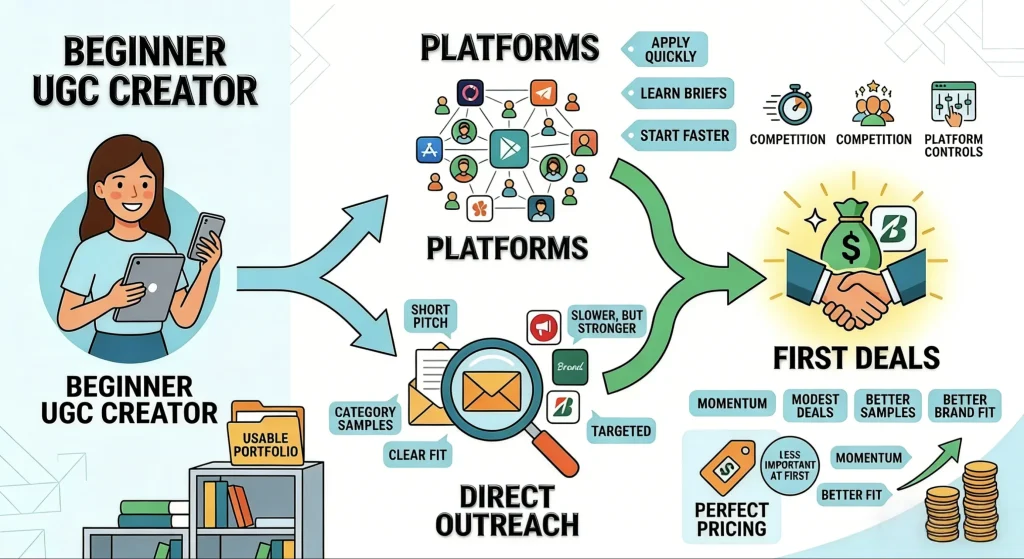
A usable portfolio helps, but it does not bring work on its own. Most beginners get their first UGC deals in one of two ways: through platforms or through direct outreach. Both can work, but they do not work equally well for the same reason.
Platforms Help You Start Faster
Platforms are useful because they lower the barrier to entry. You can see briefs, apply quickly, and learn what brands are actually asking for. That makes them helpful for practice and early momentum. The trade-off is competition. You are applying inside a crowded system, and the platform controls the process.
Direct Outreach Works Better When the Fit Is Clear
Direct outreach is slower, but often stronger over time. A short pitch to a relevant brand, backed by two or three samples that match the category, usually works better than sending generic messages everywhere. That is where many beginners get it wrong. A small portfolio with clear category fit often performs better than a bigger one that feels random.
Early Deals Matter More Than Perfect Pricing
Your first deals will probably be modest, and that is normal. Early on, momentum matters more than a perfect rate card. Stronger samples and better brand fit usually improve your rates faster than endless pricing research.
FAQ About Becoming a UGC Creator in 2026
Can I become a UGC creator without showing my face?
Yes. Faceless UGC is still a real option. Product demos, hand-only videos, voiceovers, screen recordings, and lifestyle-style clips can all work. It depends on the niche and the brief. If you are camera-shy, that does not automatically block you from UGC.
How many portfolio samples do I need before pitching brands?
Usually three to five strong samples are enough. More than that is nice, but not necessary at the beginning. The bigger mistake is waiting until your portfolio feels “finished.” It never really does.
Do brands care what editing app or tool I use?
Usually no. They care about the final output. If the content is clear, on-brand, and usable, the tool matters far less than beginners assume.
Final Thoughts
If you are trying to figure out how to become a UGC creator in 2026, the real answer is simpler than most online advice makes it sound. You do not need to master everything at once. You need a few clear samples, a portfolio that feels intentional, and a better understanding of what brands actually buy.
Start there. Make the content usable before you make it impressive. And if a simple AI workflow helps your samples feel more complete, use it as support, not a crutch. That is usually the smarter way in.