
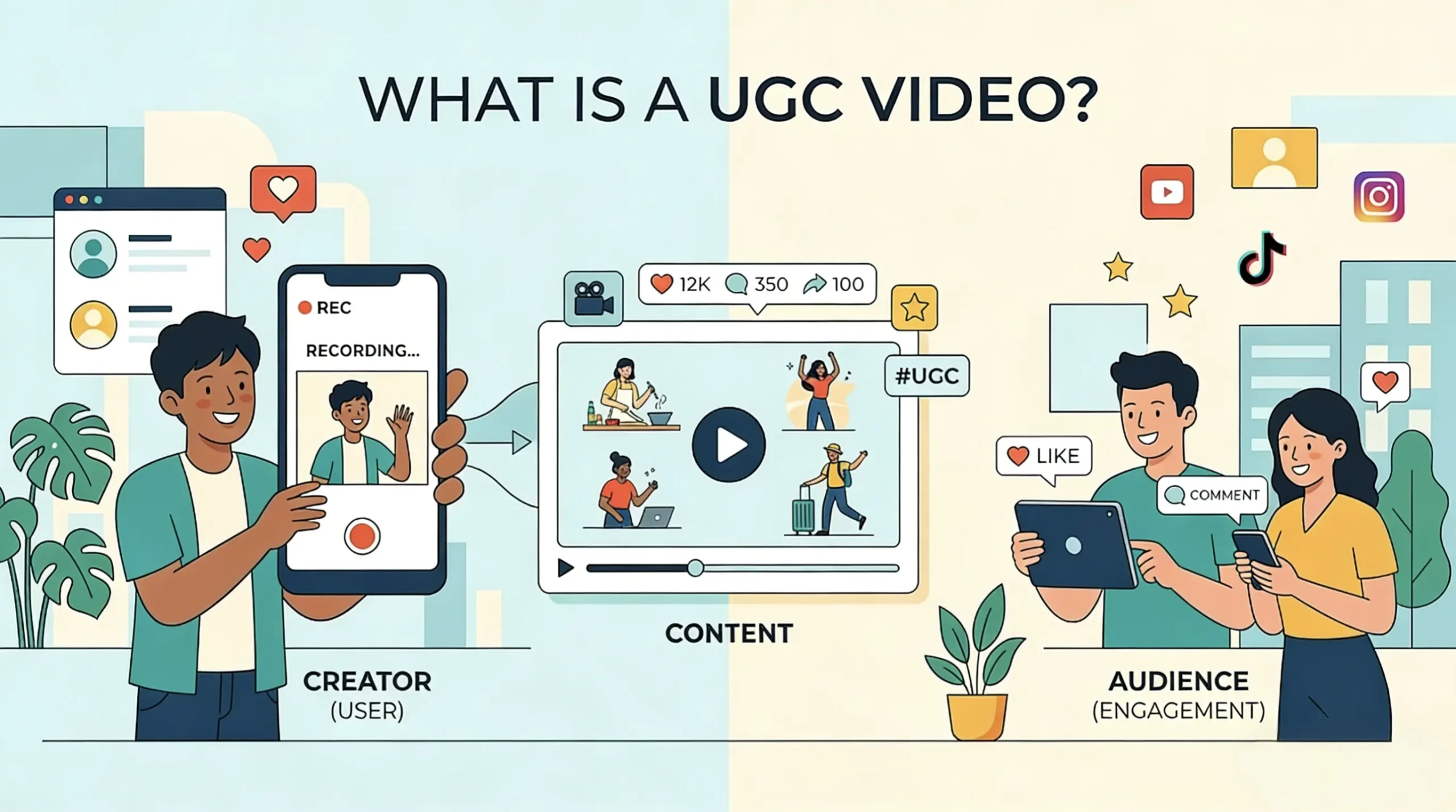
If you spend time on TikTok, Instagram, or product pages, you have probably seen a UGC video already. In simple terms, a UGC video is content that feels like it was made by a real user, not a brand. Sometimes it comes from actual customers. Sometimes it is created by paid creators in the same natural, social-first style. That is why the term can be confusing. Today, “UGC video” may refer to both customer-made content and creator-made assets used in ads, websites, and social campaigns. This guide explains the meaning of UGC video, common formats, and how brands use it.
What Is a UGC Video?
UGC stands for user-generated content. Traditionally, it refers to content created by customers, users, or fans rather than by the brand itself. In today’s video marketing, though, the term is often used more broadly to describe short-form videos that feel natural, personal, and native to social media, even when a brand pays a creator to make them. That is why the phrase can be confusing. In practice, a UGC video is defined less by who made it and more by how it feels: simple, relatable, conversational, and believable enough to look like something a real user might post.
UGC vs Influencer Content
UGC and influencer content may look similar, but brands use them differently. With UGC, brands pay for the content itself. With influencer marketing, they pay for both the content and the creator’s audience.
| Aspect | UGC Video | Influencer Content |
| Main value | The content itself | The content + audience reach |
| Need followers? | Usually no | Usually yes |
| Where it appears | Brand ads, website, brand socials | Creators own account |
| What brands pay for | Creative asset | Creative asset + exposure |
This difference matters because UGC creators are hired for usable content, not reach. That is why UGC is often a more accessible starting point for beginners.
Why Brands Use UGC Videos
Brands use UGC videos for more than one reason, but the biggest advantages usually come down to trust, adaptability, and how naturally the format fits modern digital channels.
UGC Feels More Native to Modern Platforms
Brands use UGC videos because they fit the way people already consume content online. On short-form platforms, polished advertising can feel easy to spot and easy to ignore. UGC-style content blends in more naturally with what people already watch.
Adobe describes UGC as a way to scale authenticity and social proof across the customer journey. That is a big reason brands keep using it in ads, on landing pages, and on product pages.
UGC Is Flexible Across the Funnel
One UGC video can do several jobs. A brand might use one version as a scroll-stopping ad, another as a product demo, and another as a testimonial-style asset lower in the funnel. Because the format is simple, teams can test multiple angles without building a full studio campaign every time.
That flexibility is one of the biggest strengths of UGC. It is not just cheaper-looking advertising. It is a format that can be adapted quickly and used in many placements.
Common Types of UGC Videos
Not all UGC videos follow the same format. Some work better for product education, while others are stronger for trust, conversion, or quick attention.
Product Demo
A product demo shows how the product works in a real-life setting. It is one of the most common UGC formats because it helps viewers quickly understand both the use case and the value.
Testimonial or Review
This format focuses on personal experience and results. It usually works best when the creator explains what problem the product solved, what changed after using it, or what stood out most.
Problem-Solution Video
A problem-solution video starts with a clear frustration, then presents the product as the fix. It is effective because the structure matches how many buyers think when they are comparing options.
Unboxing
Unboxing videos highlight packaging, presentation, and first impressions. They are simple, but still useful for ecommerce brands that want to build curiosity and product appeal.
Faceless UGC
Faceless UGC uses formats like hands-only demos, screen recordings, product close-ups, or voiceover clips. It works especially well for apps, tools, home products, and creators who prefer not to appear on camera.
How to Make a Good UGC Video
Good UGC does not need to look overly polished, but it does need to feel clear, intentional, and easy to trust.
Start With a Strong Hook
The first few seconds decide whether people keep watching. A good hook usually calls out a pain point, asks a direct question, or makes a specific promise that feels immediately relevant.
Focus on One Clear Message
Weak UGC videos often try to say too much at once. A stronger approach is to stay with one angle: one product, one problem, and one key benefit.
Use a Simple Structure
A simple format works best:
Hook → Problem → Solution → Proof → CTA
This structure keeps the message easy to follow and gives the viewer a clear reason to care.
Keep It Natural, Not Sloppy
Authentic does not mean careless. Clean audio, decent lighting, and stable framing still matter. The goal is not to make the video look random, but to make it feel real.
How AI Is Changing UGC Video Creation
AI is changing UGC creation mainly by making the process faster and easier to scale. Instead of replacing creators entirely, it is most useful for speeding up ideation, testing, and production support.
AI Speeds Up UGC Workflows
Teams now use AI to draft scripts, generate multiple hook variations, create voiceovers, plan scenes, and turn images into quick video concepts. That makes AI especially useful in the early stage, when the goal is to test different angles before investing more time or budget.
When AI UGC Works Best
AI works best when brands need speed, volume, and rapid iteration. It can help produce several versions of the same idea, making it easier to test different messages, visuals, or hooks across campaigns.
Why Human UGC Still Matters
AI can move faster, but human creators still bring subtle emotion, natural delivery, and lived-in credibility. That is why the strongest workflow is often a mix of both: AI helps teams test ideas quickly, while human creators make the final content feel more convincing.
FAQs About UGC Videos
What does UGC stand for in marketing?
UGC stands for user-generated content. In marketing, it usually refers to content that feels authentic and user-led rather than polished and brand-produced.
Are UGC videos always made by real customers?
Not always. Some UGC videos are created by actual customers, while others are made by paid creators in a style that looks natural and socially native.
Where do brands use UGC videos?
Brands use UGC videos in paid ads, product pages, landing pages, and social media campaigns. The same video can often be adapted for more than one placement.
How long should a UGC video be?
Most UGC videos work best when they are short and focused. The ideal length depends on the platform, but the message usually needs to become clear within the first few seconds.
Do paid UGC videos need disclosure?
In some cases, yes. If there is a paid relationship or material connection between a creator and a brand, disclosure may be needed depending on how the content is used.
Conclusion
A UGC video is not defined by high production value. It is defined by how real, clear, and believable it feels. That is why brands keep using UGC across ads, landing pages, and social content.
For brands, the lesson is simple: focus less on polish and more on communication that feels useful and human. For creators, the opportunity is not just to look natural on camera, but to make products easy to understand and trust.
AI can speed up the workflow, but it does not change the core rule. If a UGC video does not sound like something a real person would actually say, it probably will not work.
Want to create UGC-style videos faster? Tools likeAI Image to Video can help you turn product images and rough ideas into testable video concepts in less time.